What Defines an Heirloom?
An heirloom is more than just an antique or a valuable object; it’s a tangible piece of your family’s story. What defines an heirloom is the emotional and historical significance attached to it. It could be a grand piece of furniture, a delicate piece of jewelry, or even a handwritten recipe card stained with years of use. These items are vessels of memory, connecting generations and honoring family history. When you begin the process of sorting sentimental items, you are not just decluttering; you are curating your family’s legacy.
The challenge often lies in the difference between what one generation considers a treasure and what the next generation has the space or desire to keep. A heavy china cabinet that was a symbol of stability for your parents might feel like an anchor to a younger family member with a more mobile, minimalist lifestyle. This is why talking to parents about heirlooms requires immense compassion and a focus on the stories behind the items, not just the items themselves.
At Thrive Senior Transitions, we view this delicate process through a lens of empathy and strategic planning. Led by our founder, Marianne Borenstein, who brings over 30 years of world-class change management experience from companies like Tesla and Microsoft, we help families navigate the emotional weight of preserving their history while preparing for a lighter, more vibrant future.
Starting the Conversation About Sentimental Items
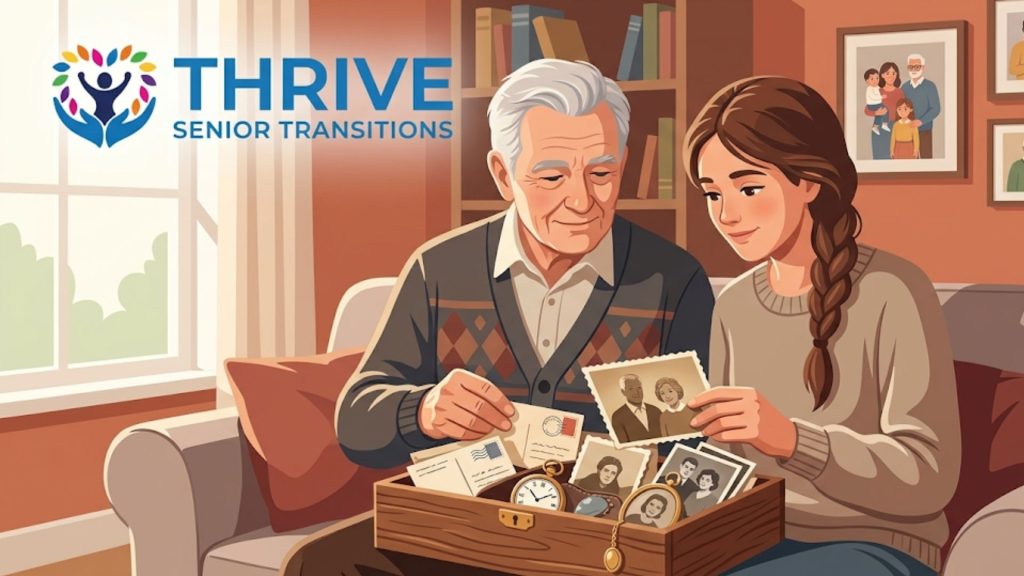
Initiating a discussion about passing on sentimental items can feel daunting. Many families avoid it, fearing it will bring up feelings of loss or create conflict. However, approaching this conversation proactively is a gift to everyone involved. It transforms a potentially stressful task into a meaningful opportunity for connection and remembrance. The key is to frame it not as a discussion about loss, but as a celebration of life and a chance for honoring family history.
Set a calm, unhurried time to talk, free from distractions. Begin by expressing your love and your desire to understand what is most important to them. Use open-ended questions like, “I would love to hear the story behind this,” or “Which of these items hold the most special memories for you?” This approach shifts the focus from “what to do with this stuff” to “what stories do we need to preserve.” This is the first step in sorting heirlooms with parents in a way that feels respectful and collaborative.
How to Identify Heirlooms Worth Keeping
When a home is filled with a lifetime of possessions, the task of sorting keepsakes can feel paralyzing. Not everything with a memory attached can or should be kept. The goal is to distinguish true heirlooms from sentimental clutter. A true heirloom often has a story that is central to your family’s identity. Sentimental clutter, while meaningful, may only hold significance for one person and may not have a broader family narrative.
To help with deciding what heirlooms to keep, our experts utilize a compassionate and structured approach to downsizing and sorting organization. We encourage families to consider a few key questions when evaluating an item.
Here is a simple guide for how to identify heirlooms during the sorting process:
- The Story Test: Can you tell a specific, meaningful story about this item that involves a family member? Items with rich narratives are often the most powerful heirlooms. If the story is the most important part, consider recording it in a journal or video and let the physical item go.
- The Uniqueness Test: Is this item one-of-a-kind or handmade by a family member? A hand-stitched quilt from your great-grandmother or a custom-built bookshelf from your grandfather carries a personal touch that mass-produced items do not.
- The Utility and Beauty Test: Does this item have a practical use or bring you genuine joy when you look at it? An heirloom doesn’t have to be locked away in a dusty box. A beautiful vase you can use or a painting you love to see on your wall has a living purpose.
A Practical Strategy for Sorting Sentimental Items
Once you have started the conversation, it’s time to create a plan. Sorting heirlooms with parents should be a marathon, not a sprint. Trying to tackle everything in one weekend will lead to burnout and poor decisions. We break the process down into manageable steps to avoid overwhelm.
Start with one room, or even just one corner of a room. Create distinct categories for the items. This simple act of sorting provides a sense of control and accomplishment. Remember, the goal is progress, not perfection.
We recommend using a clear sorting system to keep the process organized:
- Family Heirlooms: These are the core items that multiple family members may want. Set these aside for a separate discussion about how to divide family heirlooms fairly.
- Personal Keepsakes: These are items an individual wants to keep for themselves. This could be your mother’s favorite teacup or your father’s collection of books.
- Offer to Others: This category is for items that you don’t have space for but that another family member or a close friend might cherish. Take photos and create a shared album to make offering them easy.
- Donate or Sell: Many items can have a second life. A reputable consignment shop or a charity that aligns with your family’s values can be a wonderful option. For more information on finding the right place for your items, vetting platforms like Charity Navigator can be incredibly helpful in finding trustworthy organizations.
What to Do When No One Wants the Heirloom
One of the most painful moments in downsizing is discovering that your children or grandchildren simply do not want the formal dining set, the fine china, or the heavy antique silver. It is crucial not to take this personally. Generational tastes change, and younger families often live in smaller spaces with less formal entertaining needs.
If nobody in the family wants an item, reframe the narrative. Instead of feeling rejected, view this as an opportunity to pass a beautiful item on to someone who is actively looking for it. Selling it to an enthusiastic collector or donating it to a family building their first home gives the object a vibrant second life. The memory of family dinners remains with you, even if the china goes to someone else.
Navigating the Emotional Landscape
The process of sorting sentimental items is rarely just about the physical objects. It’s an emotional journey that can bring up a wide range of feelings, from joy and nostalgia to grief and guilt. It is essential to acknowledge these emotions and give yourself and your loved ones the grace to experience them.
Remember that it is okay to feel sad about letting go of an item, even if you know it’s the right decision. The memory is not in the object; the object is simply a trigger for the memory. Honoring family history is about preserving the stories and the love, not about keeping every single possession.
How to Divide Family Heirlooms Without Conflict
Deciding who gets what is often the most challenging part of passing on sentimental items. Fairness can be subjective, as an item’s monetary value may not align with its emotional value. Proactive and open communication is the only way to navigate this potential minefield successfully. The goal is to find a solution where everyone feels heard and respected, even if they don’t get their first choice.
Consider these proven methods for a fair division:
- Open Conversation and Wish Lists: Have each family member create a private list of the items they would most like to have. Compare the lists and see where there is overlap. Often, people want entirely different things, and this simple exercise solves most of the division issues instantly.
- A Round-Robin Selection: If multiple people want the same high-value items, a lottery system or a round-robin draft can be a fair way to proceed. You can draw numbers to determine the selection order. This method is transparent and removes emotion from the decision.
- Focus on Story, Not Value: Encourage family members to share why a particular item is meaningful to them. When siblings hear that a simple rocking chair was where their brother was rocked to sleep as a baby, they may be more willing to let him have it.
The Role of Appraisals in Fair Division
When dealing with items that have significant financial worth—like fine art, antique jewelry, or rare collectibles—emotional division methods might not be enough. In these cases, hiring an objective third party to appraise the items is the best way to prevent resentment. Utilizing a certified professional, such as a member of the Appraisers Association of America, ensures that the financial value is assessed neutrally. Once the value is clear, the family can divide the estate equitably, or decide to sell the item and divide the proceeds instead.
Preserving the Legacy
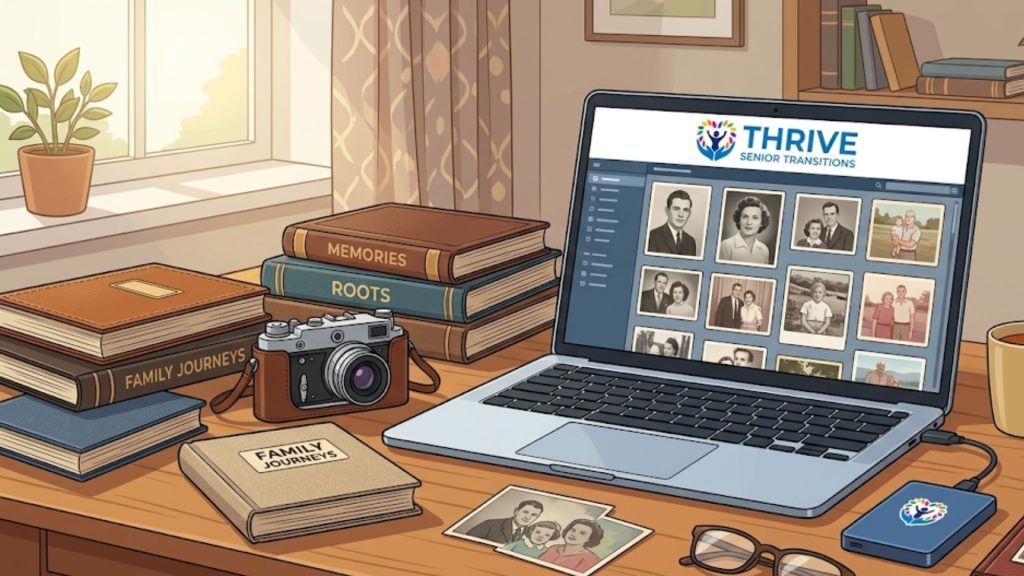
At Thrive Senior Transitions, we specialize in keepsake and memory preservation, which goes far beyond just dividing items. We help families document the stories behind their heirlooms, creating digital archives, photographing large items, and building memory books. This ensures that the legacy is perfectly preserved, no matter who ends up with the physical object or if the object is donated.
If you feel overwhelmed by this process, don’t hesitate to reach out for support.
Ready to curate your family’s legacy with confidence?
Talk to a Transition Expert today. Our team can provide the compassionate, structured guidance you need to make these important decisions with peace of mind.
Call us at 408-256-2686 to start the conversation.
Take the Readiness Quiz on our website to see how we can assist your family’s unique journey.